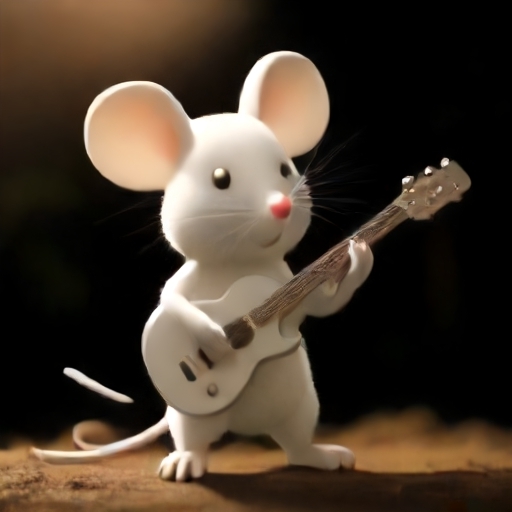
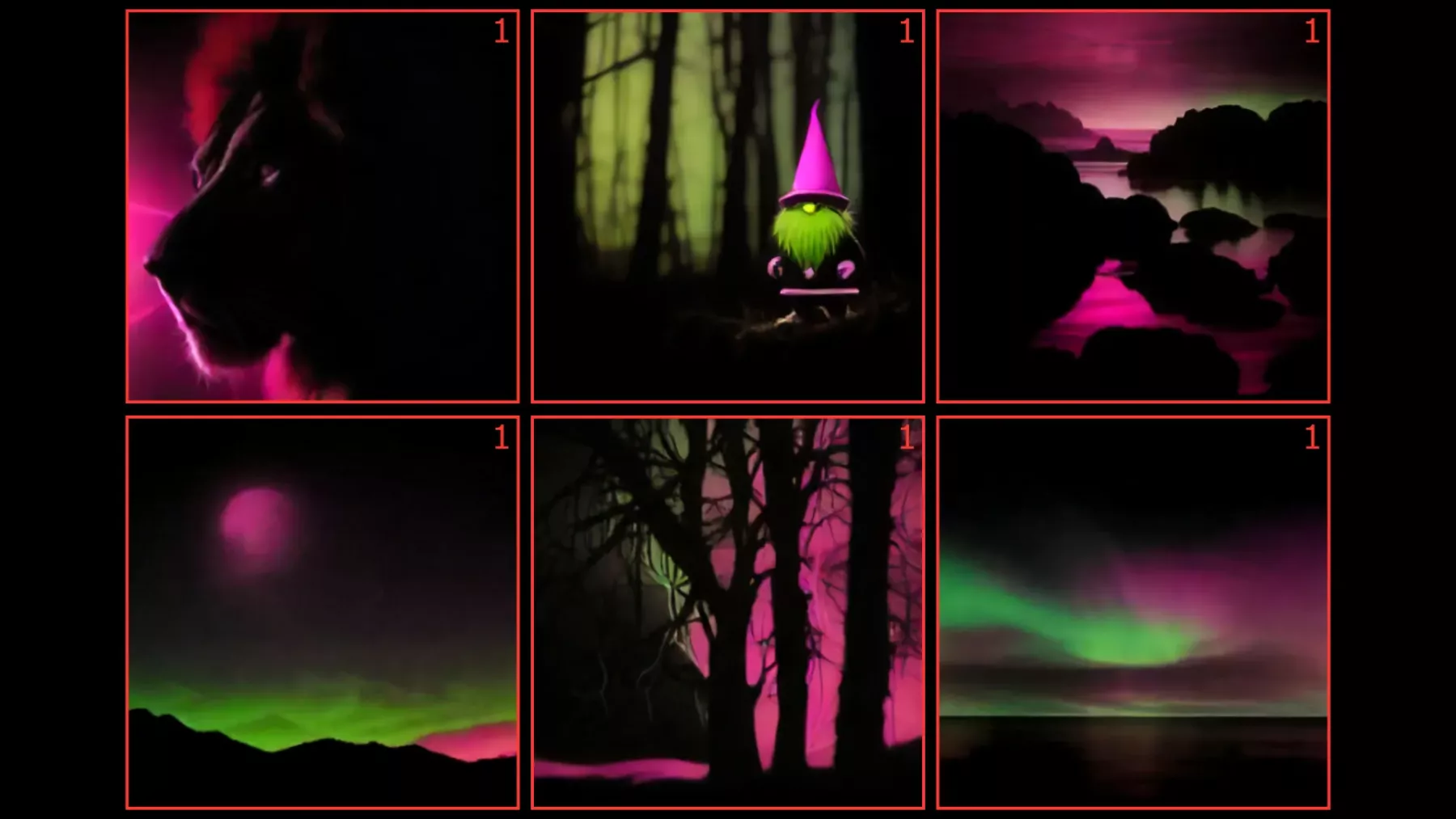
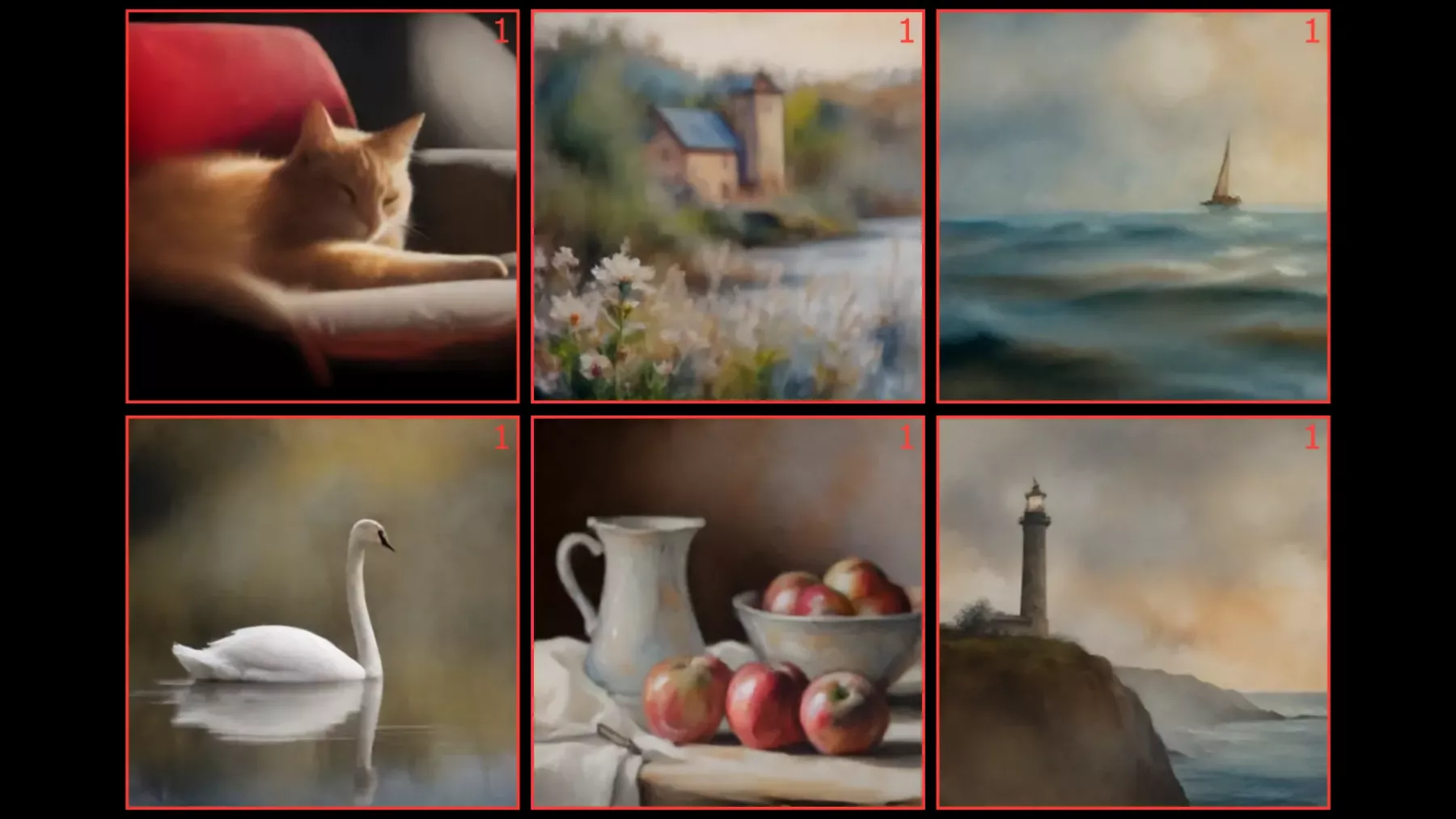
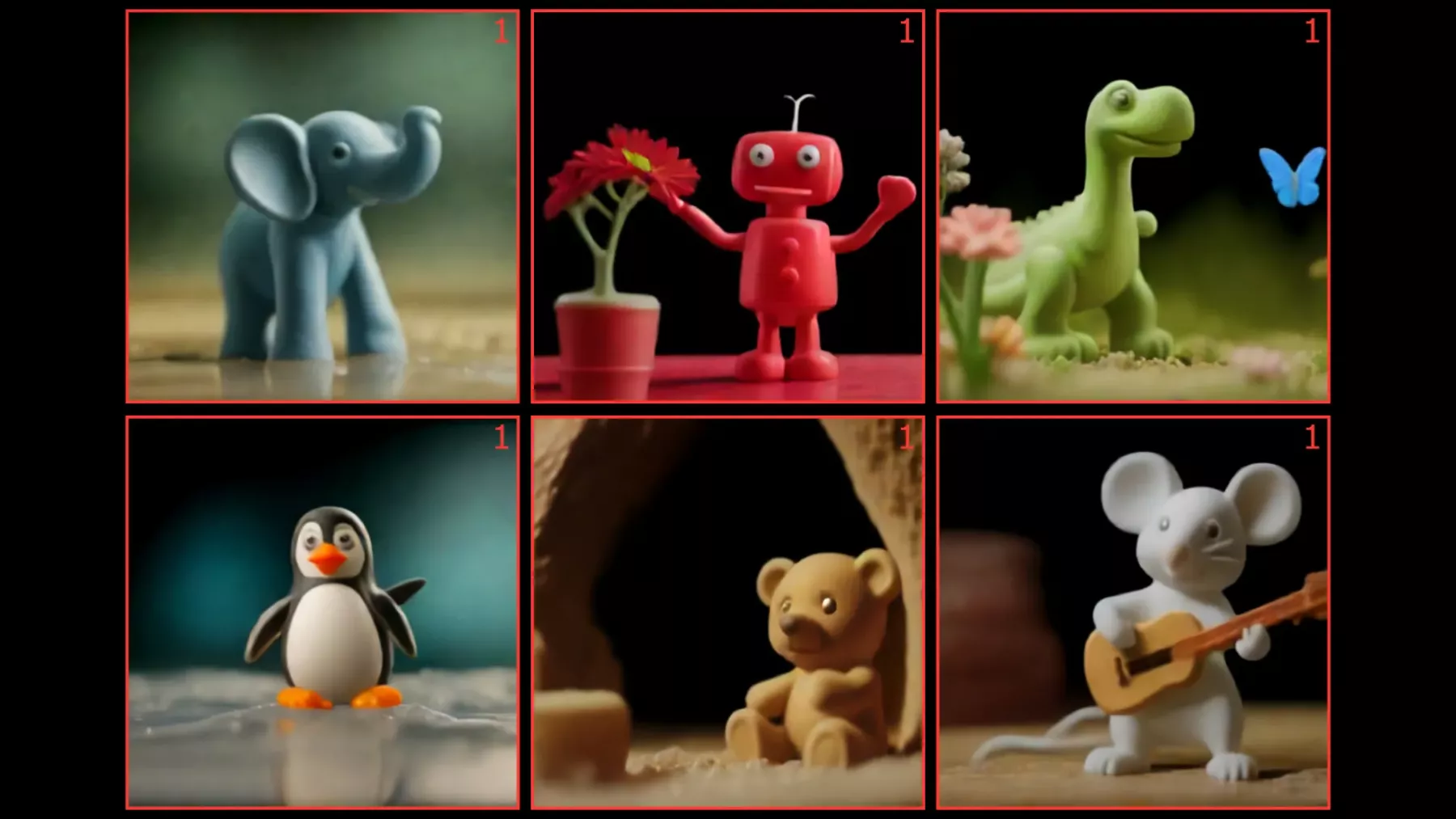
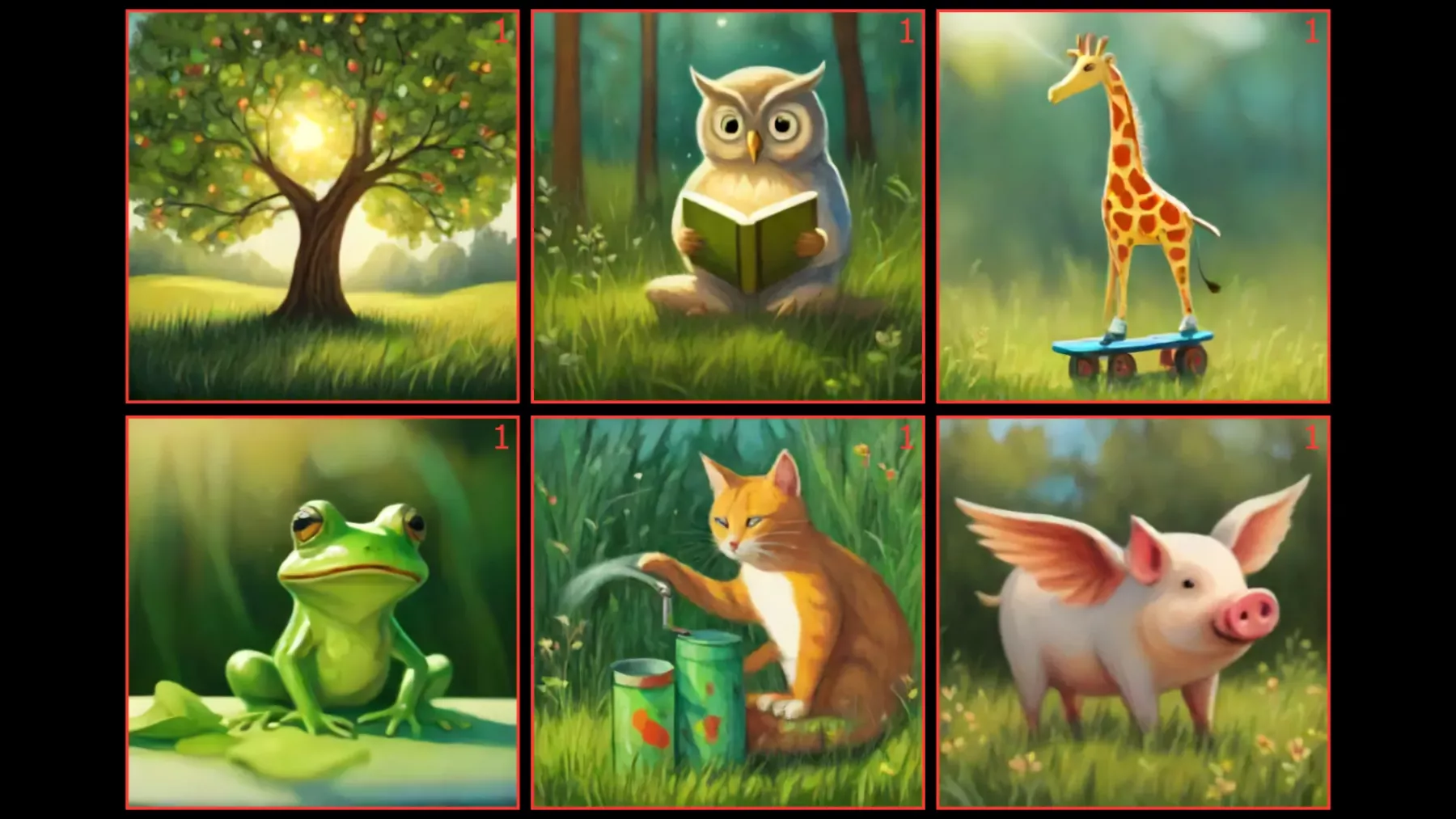
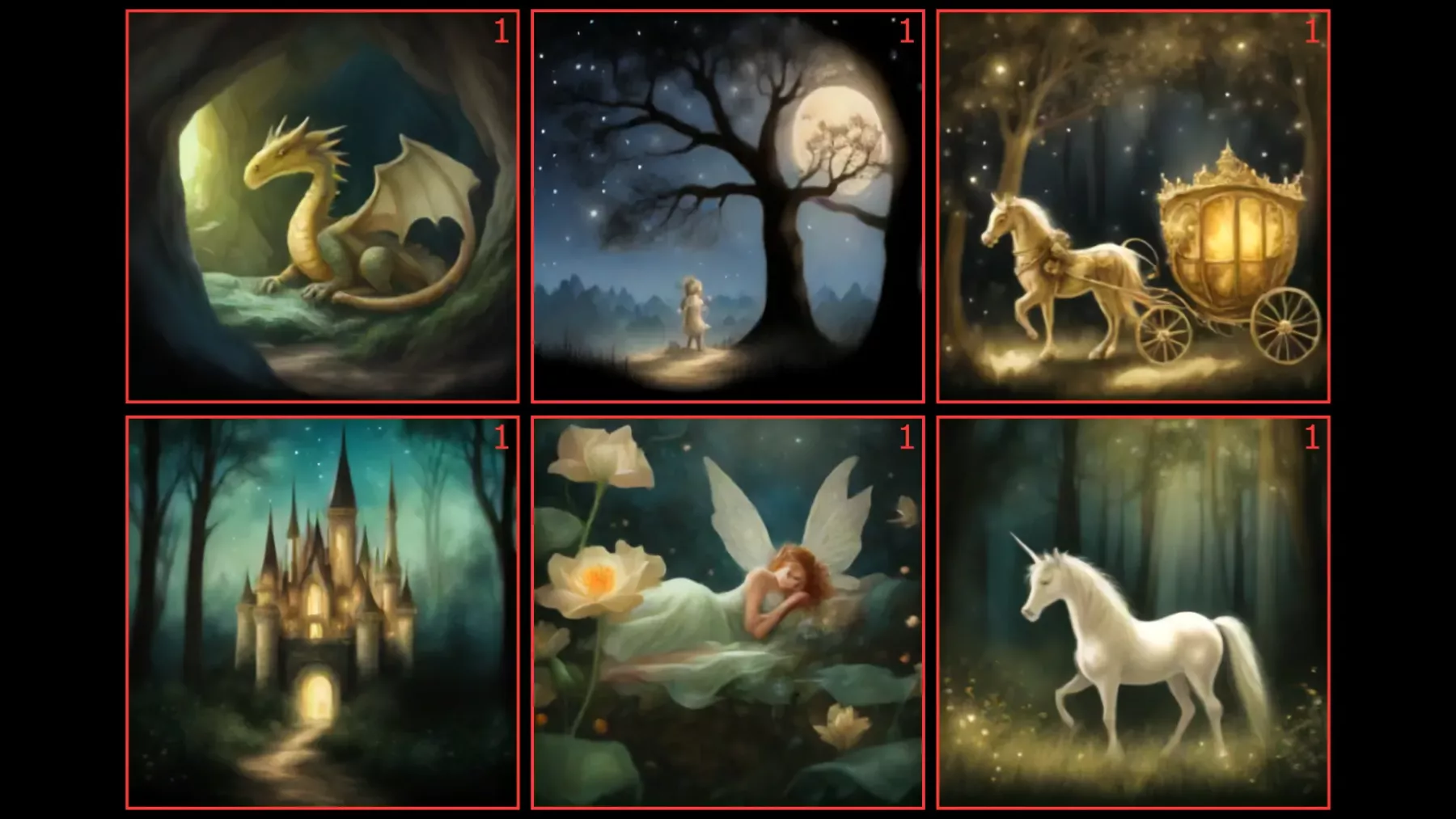
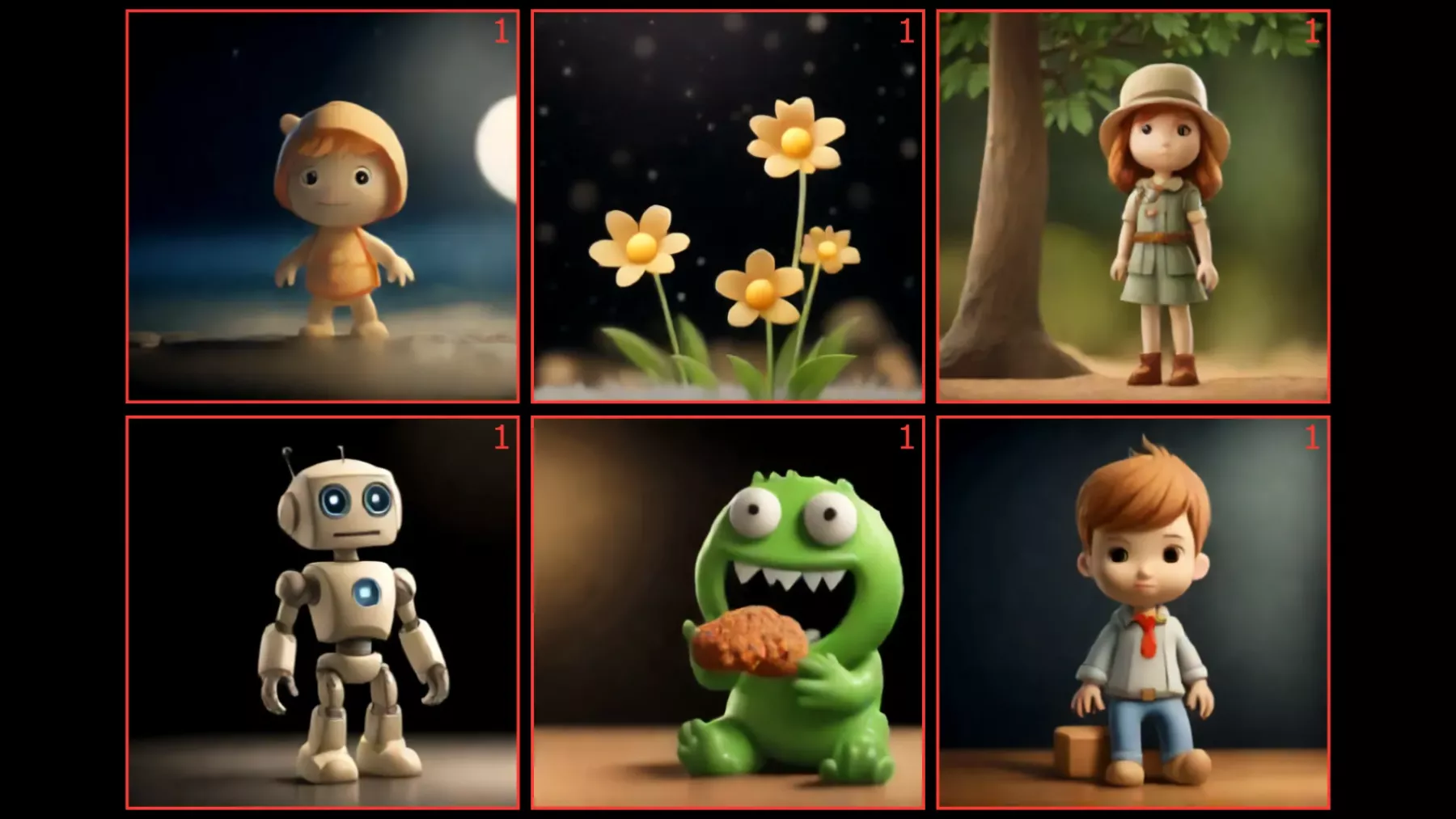
Interpretazione visiva dell’allestimento, generata con AI · Visual interpretation of the staging, AI-generated
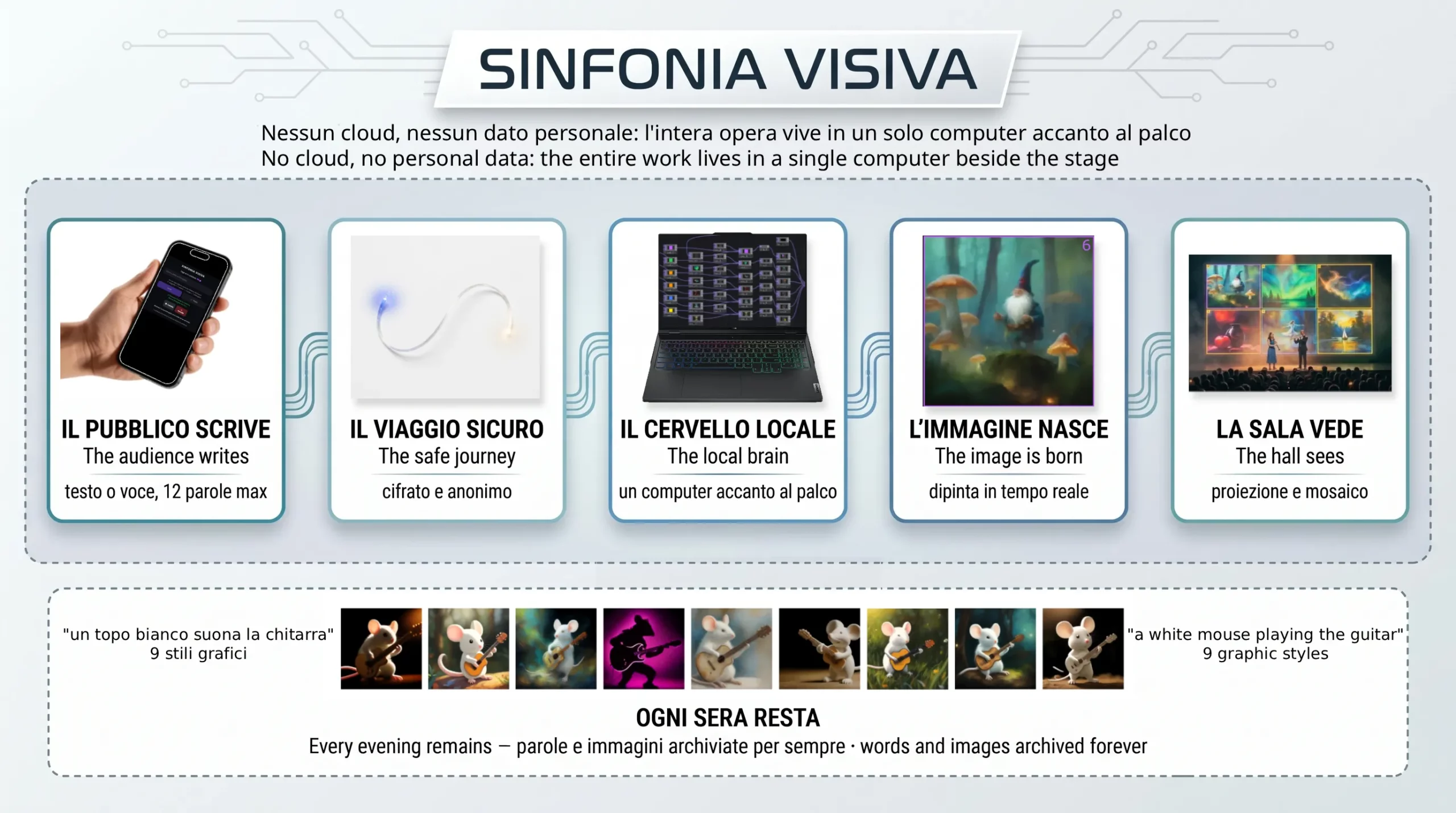
Il pubblico scrive un’immagine in italiano dal proprio telefono; un’intelligenza artificiale locale la traduce e la dipinge in tempo reale alle spalle dei musicisti. Le immagini vivono insieme alla musica, poi si congelano in un mosaico che cresce per tutta la serata.
The audience writes an image in Italian from their phone; a local artificial intelligence translates and paints it in real time behind the musicians. The images live with the music, then freeze into a mosaic that grows throughout the evening.

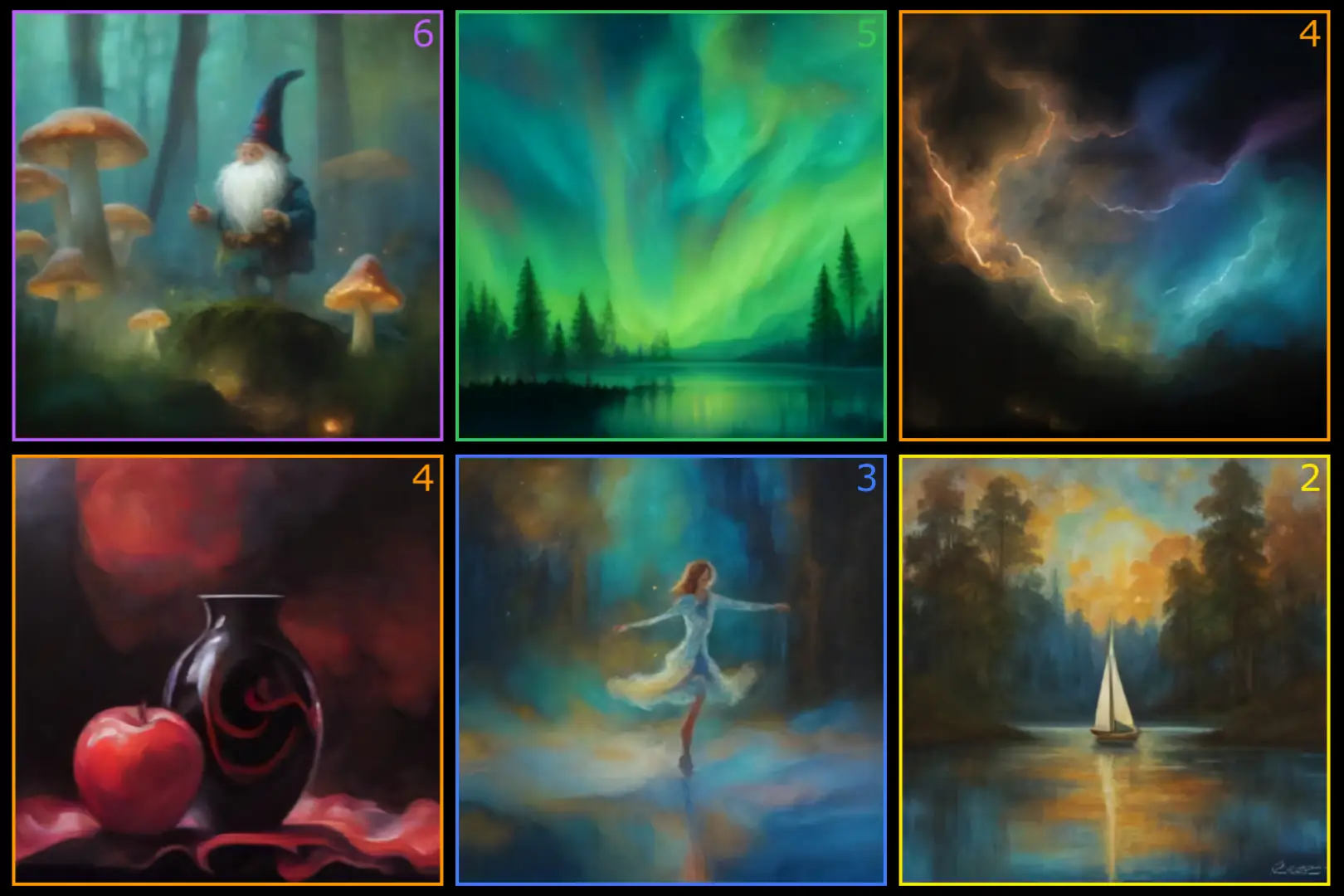
Il mosaico di una serata: sei celle che scorrono come una memoria viva. Ogni nuovo contributo entra in testa, il più vecchio esce. Ognuno resta firmato dal suo numero e dal suo colore.
The mosaic of an evening: six cells that flow like a living memory. Each new contribution enters at the top, the oldest one leaves. Each remains signed with its number and its color.
01. Come funziona
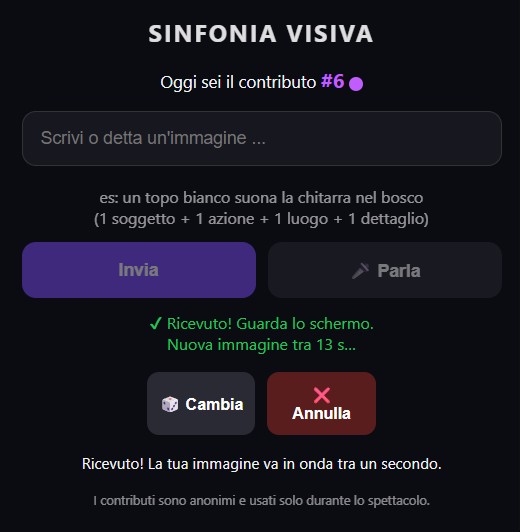
1. Inquadri il codice in sala e scrivi — o detti — la tua immagine, in massimo dodici parole.
2. In tempo reale l’immagine appare sulla proiezione e vive insieme alla musica.
3. Per quindici secondi puoi cambiare immagine o ritirarla, finché un nuovo contributo non prende il suo posto.
4. Quando arriva un’altra immagine, la tua entra nel mosaico, firmata dal tuo numero e dal tuo colore.
1. You scan the code in the hall and write — or dictate — your image, in twelve words or less.
2. In real time the image appears on the projection and lives with the music.
3. For fifteen seconds you can change the image or withdraw it, until a new contribution takes its place.
4. When another image arrives, yours enters the mosaic, signed with your number and your color.
02. Una visione, nove firme
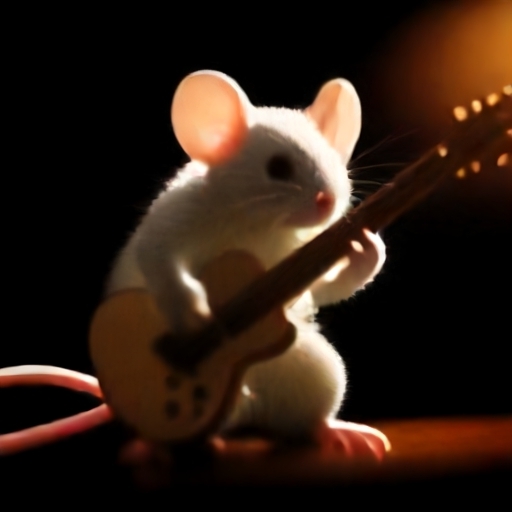
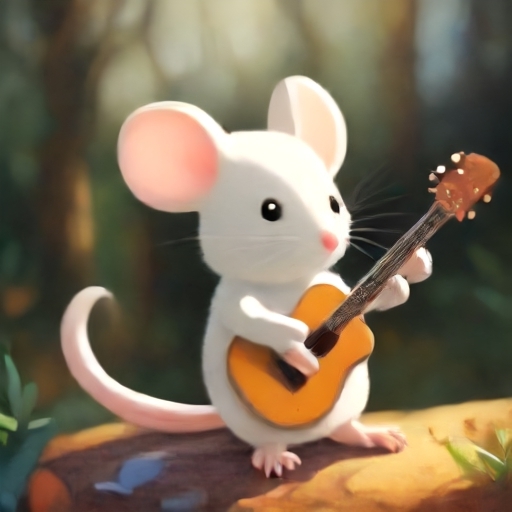
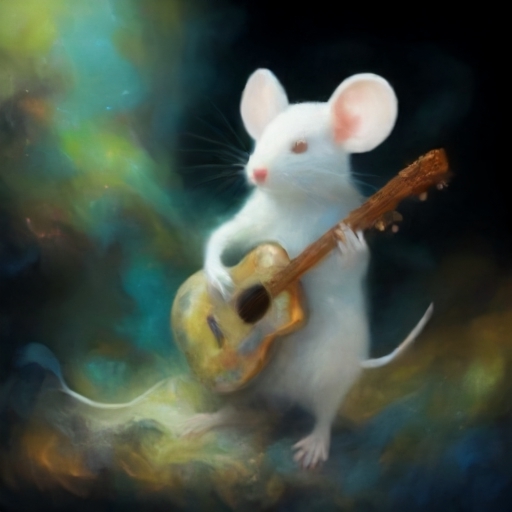
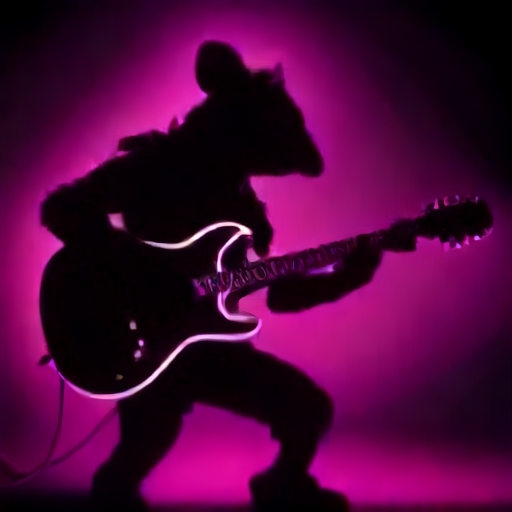
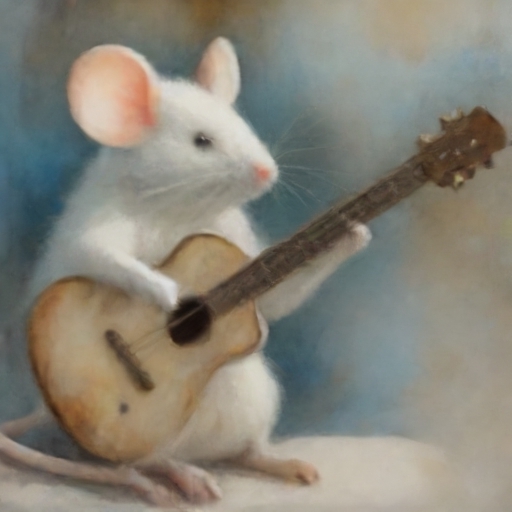
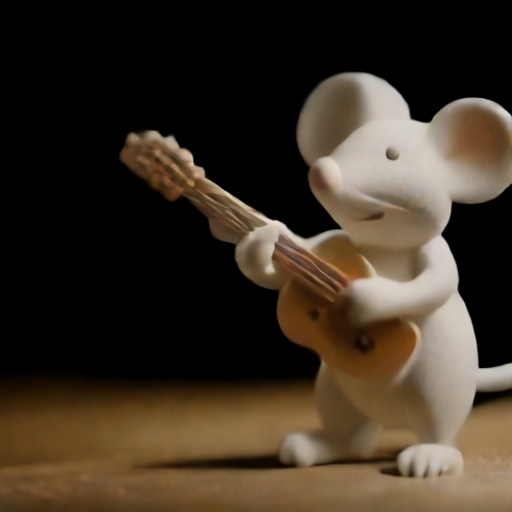
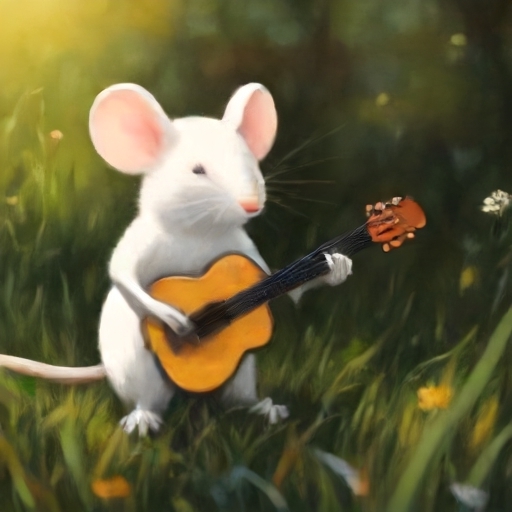
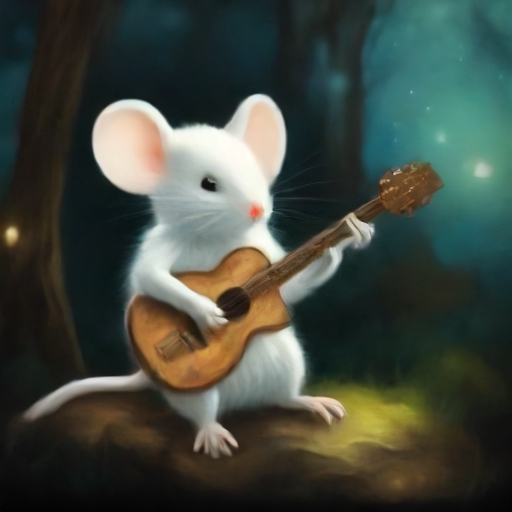
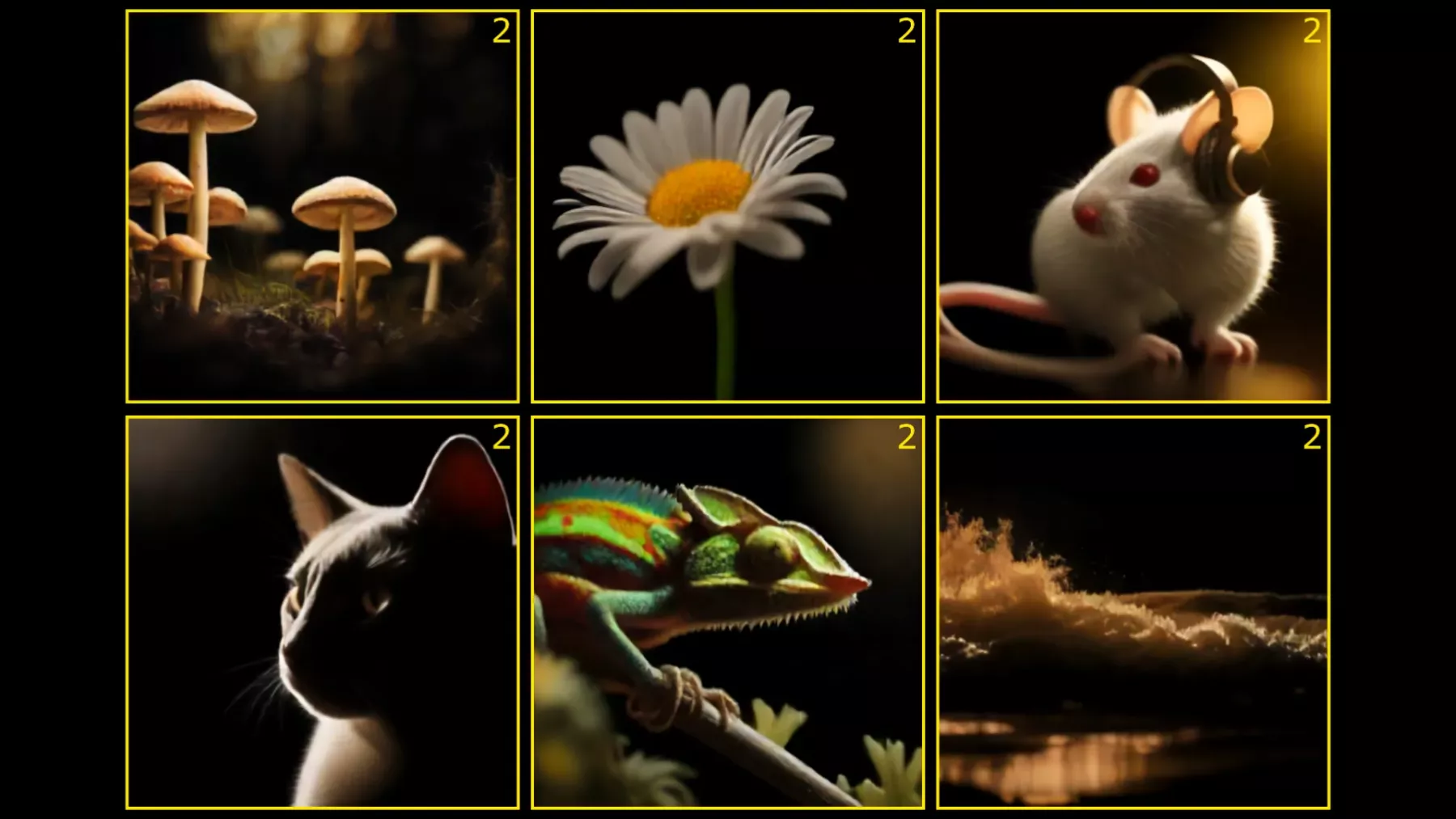
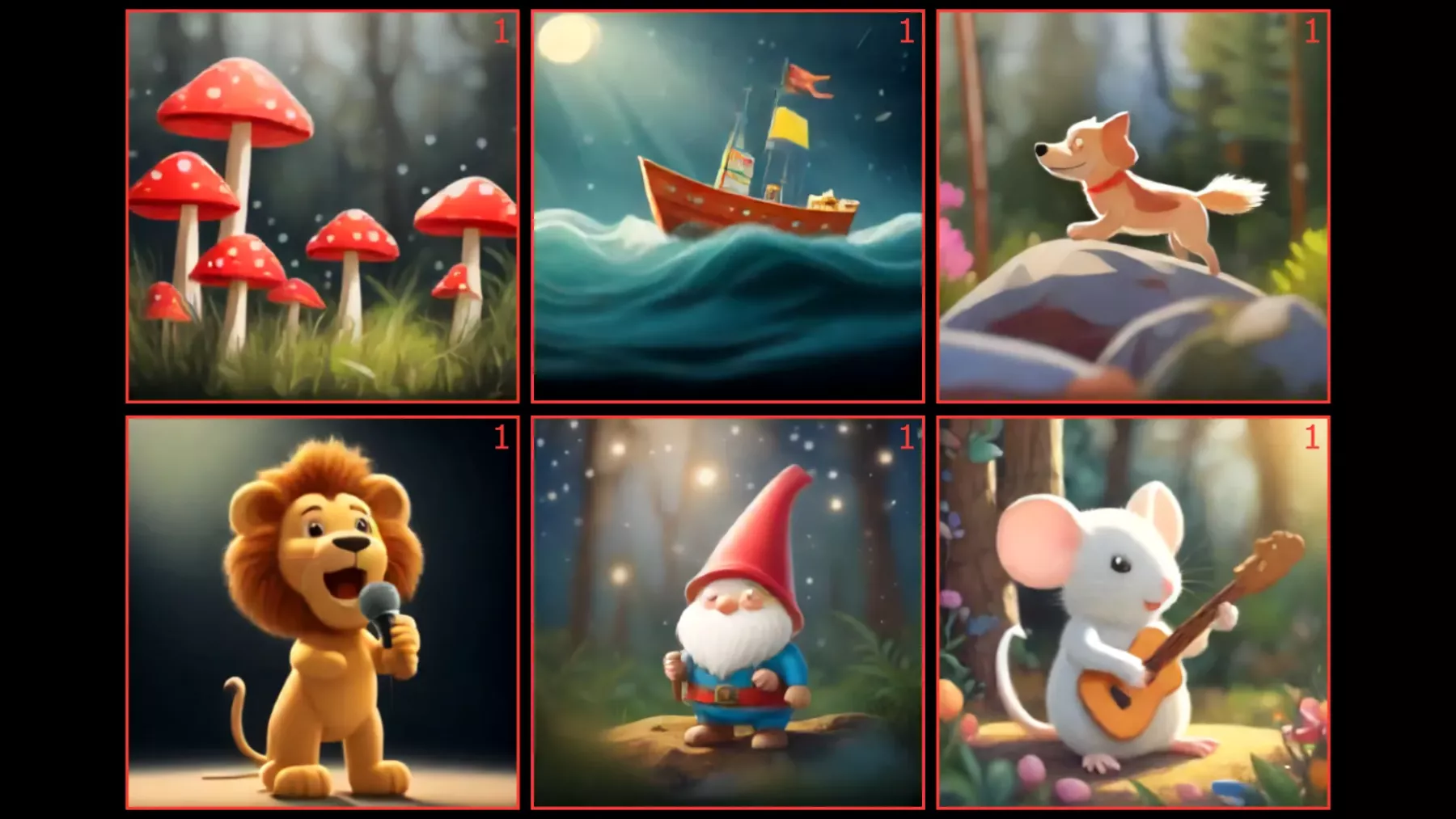
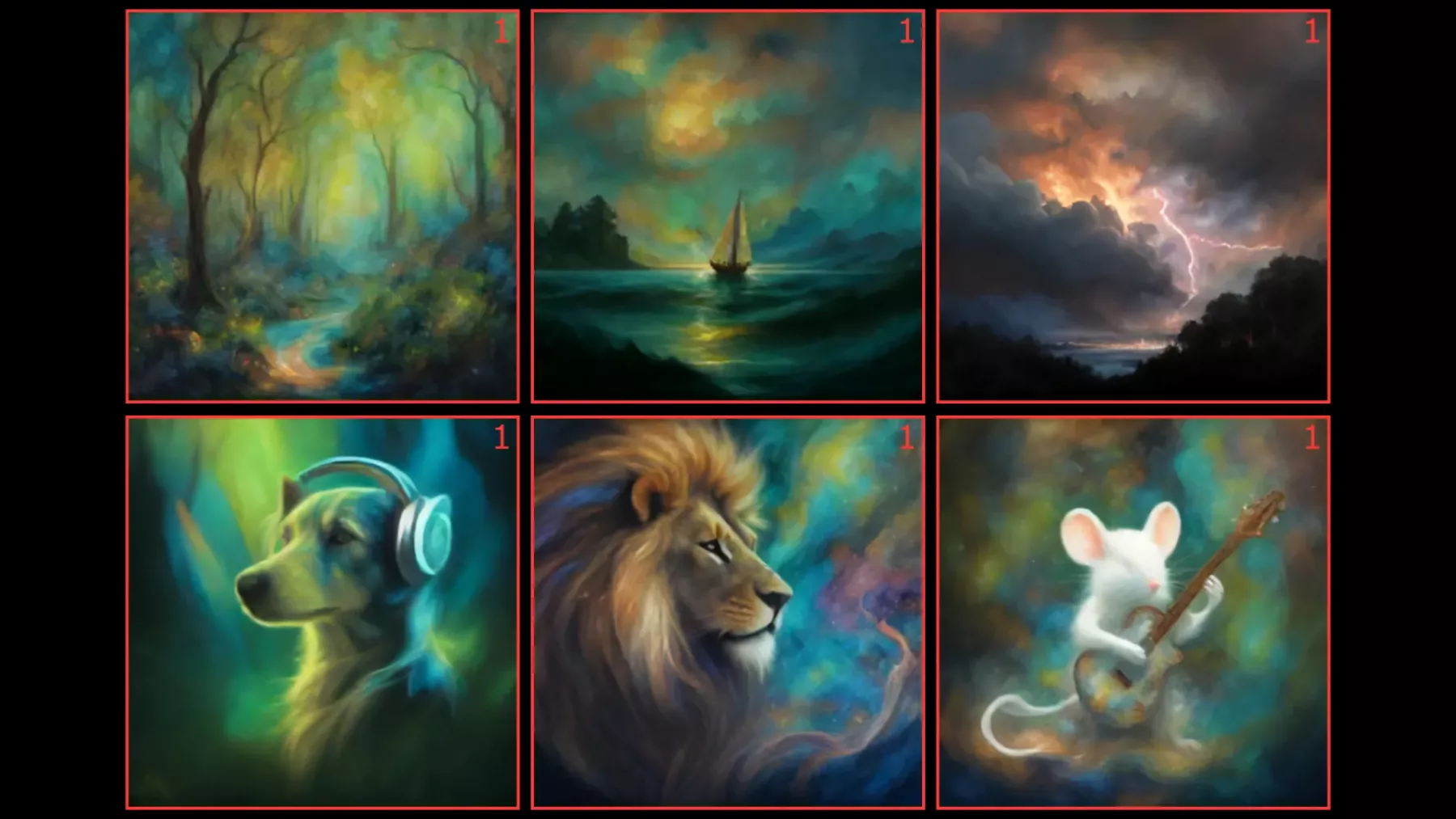
La stessa immagine scritta dal pubblico — «un topo bianco suona la chitarra» — diventa nove dipinti diversi a seconda del registro visivo che la regia sceglie in corsa, come un musicista che cambia strumento senza interrompere il brano.
The same image written by the audience — “a white mouse playing the guitar” — becomes nine different paintings depending on the visual register the director chooses on the fly, like a musician changing instruments without interrupting the piece.
1. Reale · 2. Cartoon · 3. Fantastica · 4. Neon · 5. Acquerello · 6. Plastilina · 7. Giocoso · 8. Fiaba · 9. Personaggio 3D
Cinquantaquattro contributi del pubblico — sei per ciascuno dei nove registri visivi dell’opera — attraversano tutti gli stili: ogni stile ha le sue regole, il suo suffisso pittorico, il suo colore.
Fifty-four audience contributions — six for each of the nine visual registers of the work — pass through every style: each style has its own rules, its pictorial suffix, its color.
03. Dodici parole
Il limite non è una restrizione: è la poetica dell’opera. Una visione in dodici parole è un esercizio di sintesi, quasi oulipiano. La formula è semplice: un soggetto, un’azione, un luogo, un dettaglio. Tre leoni sì; un drago e un cavaliere e un castello e una spada no — l’immagine ne terrebbe solo due, fusi.
The limit is not a restriction: it is the poetics of the work. A vision in twelve words is an exercise in synthesis, almost Oulipian. The formula is simple: one subject, one action, one place, one detail. Three lions yes; a dragon and a knight and a castle and a sword no — the image would keep only two, fused.
04. Cinque ragioni di un’opera
01 — Tempo reale, non pre-renderizzato
L’immagine nasce davvero dal dito del pubblico, in quel momento. La maggior parte delle installazioni generative usa video già pronti: qui ogni sera è un’opera nuova.
The image is truly born from the audience’s finger, in that moment. Most generative installations use pre-rendered videos: here every evening is a new work.
02 — Il pubblico come co-autore
Non è “tocca lo schermo e parte un effetto”. Il pubblico scrive un’idea e l’idea viene tradotta, interpretata, dipinta. La mediazione tra italiano e immagine è essa stessa un gesto artistico.
It is not “touch the screen and an effect plays”. The audience writes an idea and the idea is translated, interpreted, painted. The mediation between Italian and image is itself an artistic gesture.
03 — Il mosaico come memoria
Le sei celle non sono decorazione: sono l’archivio vivo della serata. Alla fine dello show la griglia è il ritratto di ciò che il pubblico ha immaginato insieme.
The six cells are not decoration: they are the living archive of the evening. At the end of the show the grid is the portrait of what the audience imagined together.
04 — Un sistema locale, per scelta
Niente cloud di terze parti, niente dati personali, niente profilazione. In un’epoca di diffidenza verso l’AI, l’opera resta qui: anonima, presente, nostra.
No third-party clouds, no personal data, no profiling. In an era of distrust towards AI, the work stays here: anonymous, present, ours.
05 — Il concerto come cornice
Due set — la co-creazione col pubblico e la contemplazione — si confrontano nella stessa serata. È una drammaturgia in due atti e, insieme, un dispositivo di ricerca.
Two sets — co-creation with the audience and contemplation — confront each other in the same evening. It is a two-act dramaturgy and, at the same time, a research device.

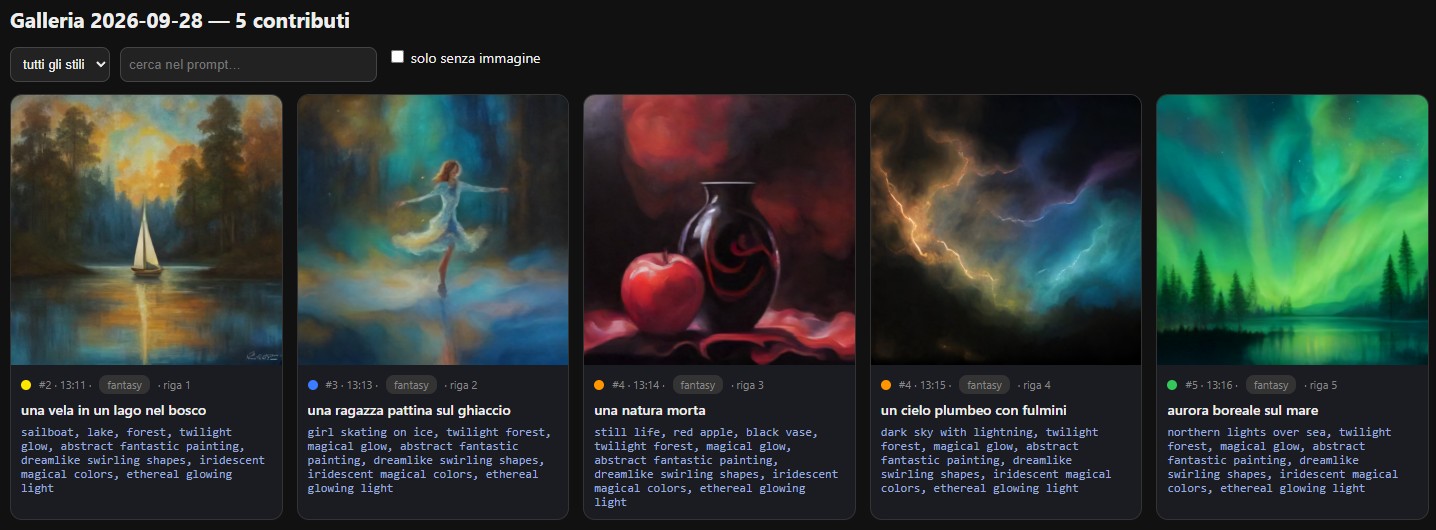
La galleria diagnostica post-show: ogni riga accosta il testo scritto dal pubblico, la traduzione inglese e l’immagine generata. È lo strumento con cui l’autore affina i registri visivi serata dopo serata.
The post-show diagnostic gallery: each row places side by side the audience’s text, the English translation, and the generated image. It is the tool with which the author refines the visual registers evening after evening.
05. Formati
Concerto interattivo — Due set: la co-creazione col pubblico durante la musica, poi la contemplazione delle immagini raccolte.
Installazione — L’opera vive da sola in uno spazio, con un tema fisso e un archivio che cresce nei giorni o nei mesi.
Performance online — Il pubblico partecipa da remoto; l’opera si condivide in diretta attraverso lo schermo.
Interactive concert — Two sets: co-creation with the audience during the music, then contemplation of the collected images.
Installation — The work lives alone in a space, with a fixed theme and an archive that grows over days or months.
Online performance — The audience participates remotely; the work is shared live through the screen.
06. Genesi
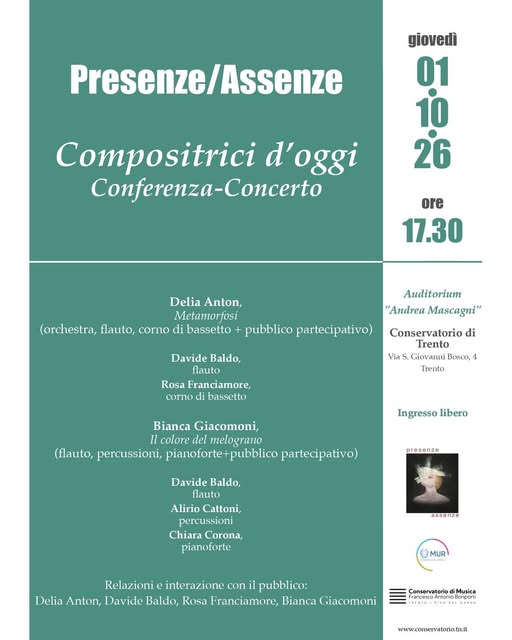
Sinfonia Visiva nasce da un’intuizione di Rosa Franciamore e Davide Baldo, musicisti e ricercatori del Conservatorio di Pavia: un concerto in cui il pubblico visualizza in tempo reale le proprie associazioni d’ascolto. Da quel seme, Enzo Gentile ha costruito l’opera nella sua interezza — l’architettura tecnica, il sistema di traduzione e moderazione, la regia visiva, i nove stili, il vincolo delle dodici parole, il mosaico come memoria: tutto ciò che trasforma un’idea in una performance funzionante. Obiettivo condiviso: avvicinare nuovi pubblici, adulti e bambini, alla musica classica.
Sinfonia Visiva originates from an intuition by Rosa Franciamore and Davide Baldo, musicians and researchers at the Conservatorio of Pavia: a concert in which the audience visualises their listening associations in real time. From that seed, Enzo Gentile built the work in its entirety — the technical architecture, the translation and moderation system, the visual direction, the nine styles, the twelve-word constraint, the mosaic as memory: everything that turns an idea into a living performance. Shared goal: bringing new audiences, adults and children, closer to classical music.
Crediti
- Concept originale: Rosa Franciamore e Davide Baldo
- Progetto tecnico, sviluppo e regia: Enzo Gentile
- Musiche e interpretazione: Rosa Franciamore e Davide Baldo
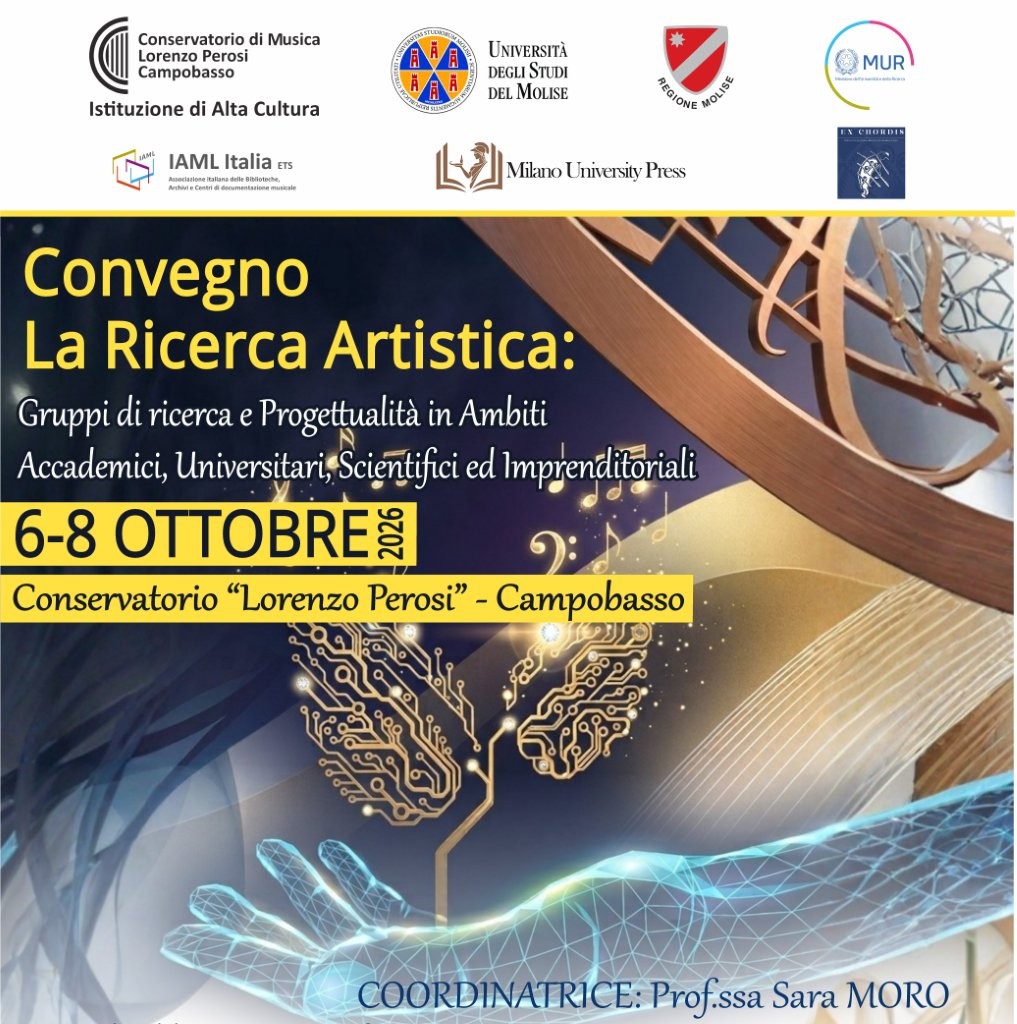
- Prima presentazione pubblica: [Ottobre 2026, Campobasso ]
- Iconografia di apertura: interpretazione visiva dell’allestimento generata con AI
- © 2026 Enzo Gentile — Sinfonia Visiva
- Original concept: Rosa Franciamore and Davide Baldo
- Technical project, development and direction: Enzo Gentile
- Music and performance: Rosa Franciamore and Davide Baldo
- First public presentation: [Ottobre 2026, Campobasso(IT)]
- Opening iconography: AI-generated visual interpretation of the staging
- © 2026 Enzo Gentile — Sinfonia Visiva